Nothing about high cholesterol feels like anything. It turns up on a routine blood test, often by chance, often late.
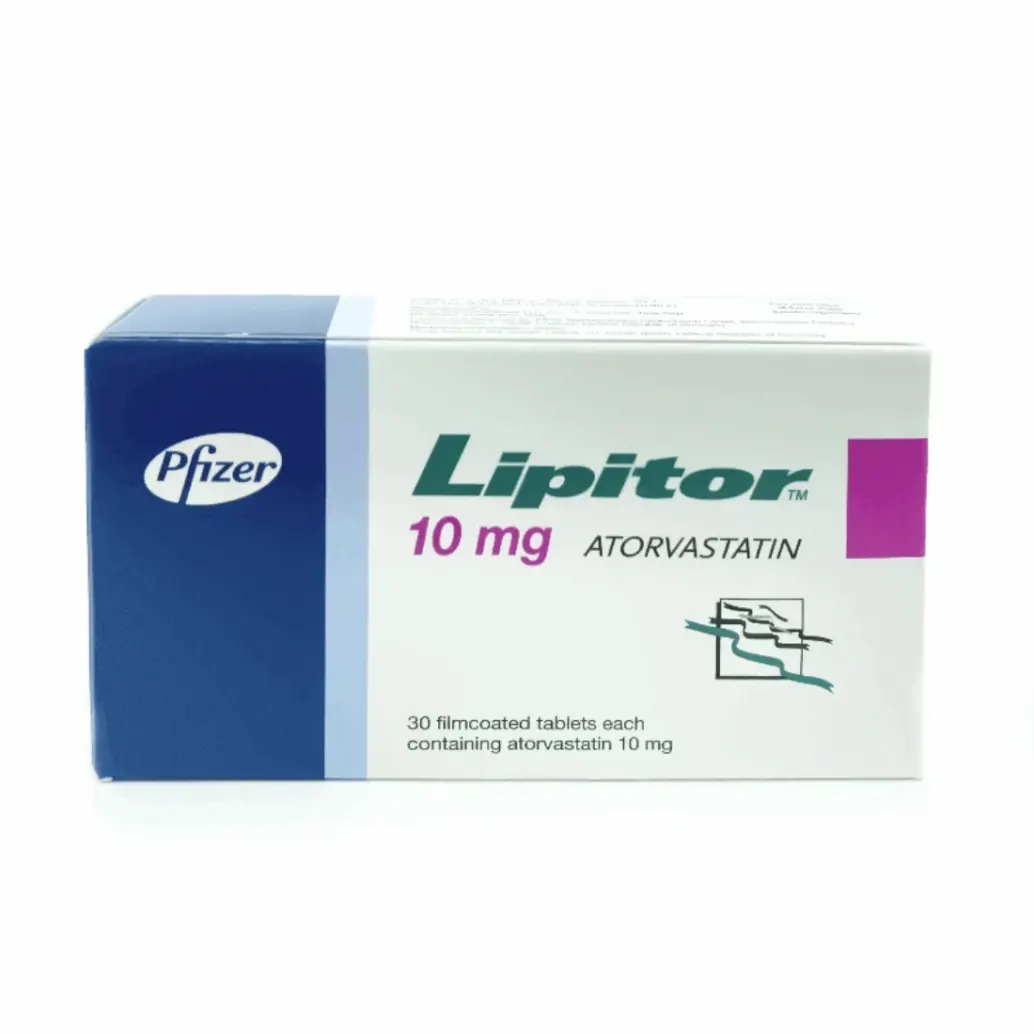
Atorvastatin cuts how much cholesterol the liver produces, and that pulls LDL out of the blood.
Without prescription, plain packaging. Skip the grapefruit juice.
LDL particles carry cholesterol out to the tissues. When there are more of them than the system needs, they start lodging in artery walls.
Immune cells arrive to clear the deposit, get overwhelmed, and become part of it. A plaque builds in the wall over years.
The narrowing itself is not usually what causes the emergency. The emergency is when a plaque's thin covering tears. Blood meets the material underneath, a clot forms within seconds, and the artery blocks completely.
In a coronary artery that is a heart attack. In the brain, a stroke.
None of this gives any warning. Which is why a laboratory number ends up driving a daily tablet.
The enzyme, and the useful consequence
Your liver produces the majority of the cholesterol in your blood. Diet contributes, but it is the smaller share.
Atorvastatin blocks the enzyme that sets the pace of that production.
Then comes the part that does most of the work. Sensing less cholesterol internally, liver cells increase the number of LDL receptors on their surface — and those receptors pull LDL particles out of the circulating blood.
Production down, clearance up. The combination is why statins lower LDL as much as they do.
There is also a seperate effect that matters: statins appear to stabilise existing plaques, making the covering less likely to tear. Some of the benefit arrives before the cholesterol number has moved much at all.
Grapefruit: is it realy worth avoiding?
This gets repeated so often it sounds like folklore. It is not.
Grapefruit and grapefruit juice block an enzyme in the gut wall that normally breaks down a portion of the dose before it reaches the bloodstream. Block it, and far more gets through than intended.
Higher levels mean a higher chance of muscle problems. The effect lasts a long time after drinking it, so timing around doses does not solve it.
Other citrus is fine. It is grapefruit specifically, along with Seville oranges and pomelo.
Muscle symptoms: what to notice
The commonest reason people abandon statins, and usually a solvable problem rather than a dead end.
The pattern to watch for: a dull ache or weakness in the large muscles — thighs, shoulders, upper arms — generally on both sides, not explained by exercise.
Report it rather than quietly stopping. Switching statin or adjusting the dose resolves it for most people, and some genuinely need an alternative class instead.
Urgent: severe muscle pain with dark urine and marked weakness. Uncommon, but it needs attention the same day.
Taking it
One tablet daily.
Evening is traditional, though this one is less time-sensitive than older statins.
With or without food.
Consistency matters more than the exact hour.
Other interactions worth knowing
Certain antibiotics and antifungals
Some HIV medicines
Ciclosporin
Some heart rhythm medicines
Fibrates, which raise the risk of muscle problems together
Possible side effects
Muscle aches
Headache
Digestive upset
Changes in liver blood tests
A small rise in blood sugar
Occasional sleep disturbance
Liver tests are usually checked before and during treatment. Mild changes are common and frequently settle on their own.
It is not about willpower
People often feel a statin is an admission of a bad diet. That framing is wrong and it puts people off treatment they need.
How much cholesterol your liver produces is substantially inherited. Some people eat badly and have unremarkable numbers; others eat carefully and have high ones.
Diet still helps and still matters. But for a lot of people it cannot get the number where it needs to be, and that is biology rather than failure.
Ordering without prescription: how it works
A statin is measured in years rather than weeks, so uninterrupted supply is the only practical consideration.
Pick the strength and the pack size, put in a delivery address, confirm. Couple of minutes, any time of day, no queue and no conversation across a counter.
It goes out in plain packaging. No pharmacy name on the outside, nothing that hints at what is inside. How long delivery takes depends on where the parcel is headed.
On price it comes down to strength and pack size. Larger packs generally work out better per unit, which matters on something taken long term.
A parcel locker or a work address works as well as home for UK delivery, provided the details are complete and the name is on the door. The plain packaging is unchanged either way.