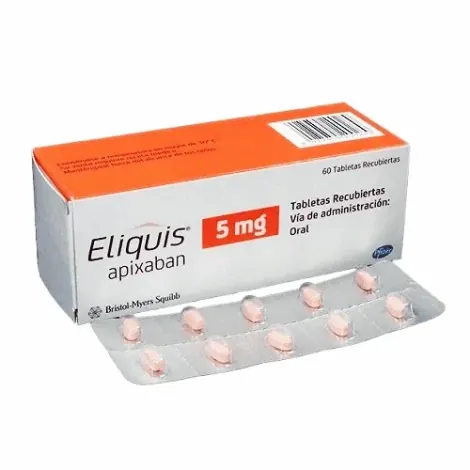
Eliquis is an oral blood thinner prescribed to lower stroke risk and treat deep vein thrombosis or pulmonary embolism. The tablet provides steady anticoagulation without the frequent INR clinic visits older therapies demand.
People dealing with atrial fibrillation or recent hip surgery hear about this tablet early on. Searching for an Eliquis online pharmacy usually starts after a doctor explains what the therapy actually targets. Eliquis is Bristol Myers Squibb's brand name for apixaban. It is an oral blood thinner that stops blood clots from plugging vessels, which keeps wandering clots from choking off circulation in the lungs or brain.
Cardiologists prescribe it heavily for adults with nonvalvular atrial fibrillation. In that condition, the upper chambers quiver, blood pools up, and stroke risk climbs fast. Orthopedic teams also turn to it right after knee or hip replacement operations so patients stay clear of clots while bedbound. And when someone presents with deep vein thrombosis in the calf or an active pulmonary embolism, apixaban treats the existing block and keeps another episode from developing.
How apixaban works against clotting
The biochemistry comes down to a clear chain reaction. Your vascular system uses a set of clotting enzymes to seal up simple paper cuts. One central protein in this cascade is Factor Xa. Take Factor Xa away, and prothrombin fails to turn into thrombin. Without thrombin, fibrin threads never knit together to build a stubborn clot.
Apixaban is a direct Factor Xa inhibitor. It latches onto Factor Xa molecules directly and blunts their activity for hours. Unlike warfarin, the drug leaves dietary vitamin K alone, which frees patients from regular lab fingersticks and strict vegetable limits. Blood keeps circulating freely without halting natural wound healing entirely.
What Eliquis dosage is usually prescribed?
Clinicians match the dose to your diagnosis, age, body weight, and renal clearance. Precision matters here. Too low a dose leaves clots unmanaged, while too high a dose pushes bleeding risk upward. The standard schedules include:
Atrial fibrillation: The usual starting point is Eliquis 5 mg taken twice daily. Prescribers drop the strength down to Eliquis 2.5 mg twice a day if a patient meets two or more criteria: age 80 or older, body weight at or under 60 kg, or serum creatinine at 1.5 mg/dL or higher.
Treating active DVT or PE: Patients take 10 mg twice daily across the first seven days to break the clot down quickly. After that opening week, the maintenance dose becomes 5 mg twice daily.
Preventing recurrence: After completing an initial six months of clot therapy, a protective dose of 2.5 mg twice a day often continues for long-term safety.
After joint replacement: Following knee replacement surgery, patients usually take 2.5 mg twice daily for 12 days. For hip replacement, the same 2.5 mg schedule runs for 35 days.
Take the tablet twelve hours apart every morning and evening. You can swallow it with food or on an empty stomach, since meals do not alter drug absorption. If you miss a dose, take it immediately that day. Never take a double dose to make up for forgotten hours.
How long does Eliquis last in your system?
Apixaban reaches its highest blood concentration roughly three to four hours after swallowing. The drug carries an elimination half-life near 12 hours in healthy adults. Because clearance happens steadily, the twice-a-day schedule keeps protective blood levels stable. By the twelfth hour, drug concentration drops off noticeably, which is why skipping a tablet leaves you vulnerable.
Never stop taking apixaban abruptly without consulting your doctor. Halting treatment suddenly removes your anticoagulant safety net and sharply raises the risk of stroke or fresh venous clots.
Who should avoid taking this blood thinner?
Any medication that dials down clotting carries restrictions. Anyone with active pathological bleeding, such as a bleeding peptic ulcer or recent cranial hemorrhage, must avoid apixaban. A documented hypersensitivity to apixaban or any formulation binder also rules it out entirely.
Patients with mechanical heart valves should not use this medication. Clinical trials like the ARISTOTLE sub-analyses confirmed that direct oral anticoagulants do not protect artificial valve surfaces reliably. Severe hepatic impairment is another firm contraindication, because poor liver synthesis makes bleeding unpredictable. Doctors also avoid it during pregnancy and breastfeeding due to sparse human safety registries.
What side effects might you experience?
Bleeding is the main unwanted effect seen with apixaban. Most episodes stay mild and manageable, but careful self-monitoring is essential. Everyday issues include:
Minor nosebleeds or bleeding from gums when brushing teeth
Skin bruising that appears without an obvious fall or strike
Minor kitchen cuts taking several extra minutes to stop bleeding
Nausea, mild lightheadedness, or feeling slightly worn out
Severe bleeding signs require emergency evaluation without delay. Watch for red or tarry black stools, bright red urine, unusual joint swelling, or vomiting material that looks like coffee grounds. A critical alert also applies to epidural anesthesia or spinal taps. Taking apixaban near spinal procedures risks an epidural hematoma that can lead to permanent paralysis, so tell your anesthesia team right away.
Which medications interact with apixaban?
Apixaban clears through hepatic CYP3A4 enzymes and intestinal P-glycoprotein transporters. When other substances alter those specific pathways, blood levels shift dramatically. The interaction risks fall into distinct groups:
Strong inhibitors like ketoconazole, itraconazole, or ritonavir slow down clearance, which pushes plasma levels higher and increases bleeding risk. In contrast, strong inducers such as rifampin, carbamazepine, and St. John's wort speed up breakdown, leaving you vulnerable to sudden clots. Combining regular pain medications like ibuprofen, naproxen, or aspirin with apixaban also raises gastrointestinal hemorrhage rates. While you cannot buy Eliquis over the counter, everyday retail products still interfere; give your pharmacist an updated list of all prescriptions, pain relievers, and herbal extracts before starting.
Where can you find an Eliquis low price today?
Long-term anticoagulation turns monthly refills into a substantial ongoing cost. Many patients look to buy Eliquis 5 mg through reputable digital channels to protect their budget. When you order Eliquis online via PharmaAccess, you can review package options and handle your prescription directly from home.
The overall Eliquis price depends mostly on pack size and distribution costs. Securing a 90-day or 180-day supply usually brings a lower per-tablet rate than purchasing 30-day packs. Sourcing via established online dispensaries also skips physical storefront overheads, keeping rates balanced. Packages ship in secure, tamper-evident parcels with real-time tracking so you can follow delivery from dispatch straight to your door.
Frequently Asked Questions
Can you drink alcohol with Eliquis?
Occasional light drinking is generally permitted, but keeping alcohol intake minimal is sensible. Heavy drinking irritates the gastric mucosa, boosts internal bleeding dangers, and places unnecessary clearance burdens on liver tissue.
Is Eliquis sold without prescription?
Apixaban is an authorized prescription medicine because inappropriate doses create severe bleeding hazards. A medical provider must evaluate renal numbers, overall clot risk, and concurrent drugs before writing a prescription.
Can I crush the tablet if I have trouble swallowing?
Yes. If swallowing whole tablets proves difficult, crush the tablet and suspend it in 30 mL of water, 5% dextrose, or apple puree immediately before drinking.
What should I do before having dental work or surgery?
Notify your oral surgeon or proceduralist about your apixaban schedule well in advance. Minor dental cleanings may proceed without change, but major interventions often require pausing doses 24 to 48 hours prior to the procedure.