
General Health Without Prescription | PharmaAccess
Not everything fits a single category. This is where treatments land that do not belong under one organ or one condition.
Support for stopping drinking, preventive measures, and the things that are occasionally needed. Without prescription, in plain packaging.
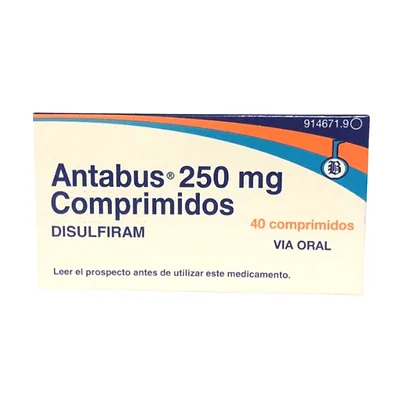
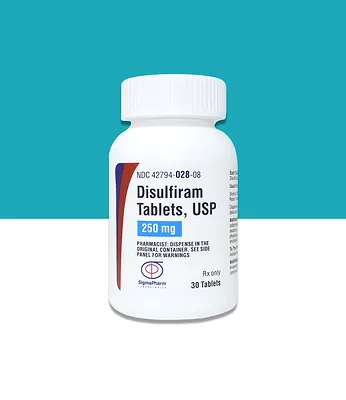
What belongs in this group?
This group collects products that cannot sensibly be assigned to one organ system or one disease.
It includes support for stopping drinking, preventive treatments, and medicines used in particular situations rather than continuously.
What they share is that they are usually part of a wider plan rather than a complete treatment on their own.
Support for stopping drinking
The most significant thing in this group, and the one that needs explaining properly.
Alcohol is broken down in two stages. First it becomes acetaldehyde, a genuinely toxic compound responsible for most of what a hangover feels like. Then an enzyme converts that into something harmless, quickly.
Some medicines block that second enzyme. Acetaldehyde accumulates, and even a small amount of alcohol produces a severe reaction: flushing, pounding heart, violent nausea, headache, falling blood pressure.
The point is not really the reaction. It is that the decision moves. Take the tablet in the morning and by the evening drinking is not an available option — so the argument never happens.
One decision made clear-headed, instead of a dozen made when you are tired and someone has offered. That shift is the actual mechanism.
Where alcohol hides
Complete avoidance is required, and people get caught out by things they never counted as alcohol.
- Mouthwash and some toothpastes
- Cough syrups and herbal tinctures
- Hand sanitiser, used heavily
- Sauces, desserts and dishes cooked with wine
- Some aftershaves and skin products
- Low-alcohol beer, which is rarely genuinely alcohol-free
And the reaction stays possible for well over a week after the last tablet. Stopping the medicine does not immediately make alcohol safe.
One safety point that is not a formality: the first tablet must never be taken while there is alcohol in your system. And withdrawal after heavy prolonged drinking is itself a medical situation needing supervision — tremor, sweating, hallucinations and seizures are all possible.
The tablet is not the treatment
Worth saying clearly, because expectations get set wrongly.
It creates a barrier. It does not change why someone drinks, and it teaches nothing about managing without alcohol.
Which is why it works as part of something larger: counselling, a support group, changes to routine and environment. On its own, the barrier eventually just gets removed.
Supervised dosing — someone present when it is taken — improves outcomes substantially, for exactly that reason.
Prevention, and why it is worth the bother
The other half of this group is things used before a problem appears.
The logic is the same throughout: preventing is simpler and cheaper than treating consequences. And with most chronic conditions, damage accumulates silently without symptoms.
Which makes it worth checking the basics periodically — blood pressure, blood sugar, lipids, blood count, thyroid. Particularly where something runs in the family.
Things worth knowing about any medicine
- Keep a list of everything you take, including herbs and supplements
- Herbal products interact too — St John's wort especially
- Check expiry dates, particulary in a long-standing cupboard
- Store dry and at room temperature, not in the bathroom
- Keep everything out of reach of children
- Do not split tablets that have no score line
The bathroom point is the one most frequently broken. Humidity and temperature swings shorten the life of a lot of medicines more than people realise.
Ordering without prescription: how it works
Having what you need before you need it is the practical approach with most of this.
Pick the product, the strength and the pack size, enter a delivery address and confirm. A couple of minutes, any time of day, no queue and no conversation accross a counter.
Everything goes out in plain packaging. No pharmacy name on the outside, nothing indicating what is inside. How long delivery takes depends on where the parcel is going.
On price, the factors are strength and pack size. Larger packs generally work out better per unit.
Prices sit below a UK high street counter for an unglamorous reason: no rent in a good location, no counter staff, no window display. Most of the range is generic as well. That saving goes to you.