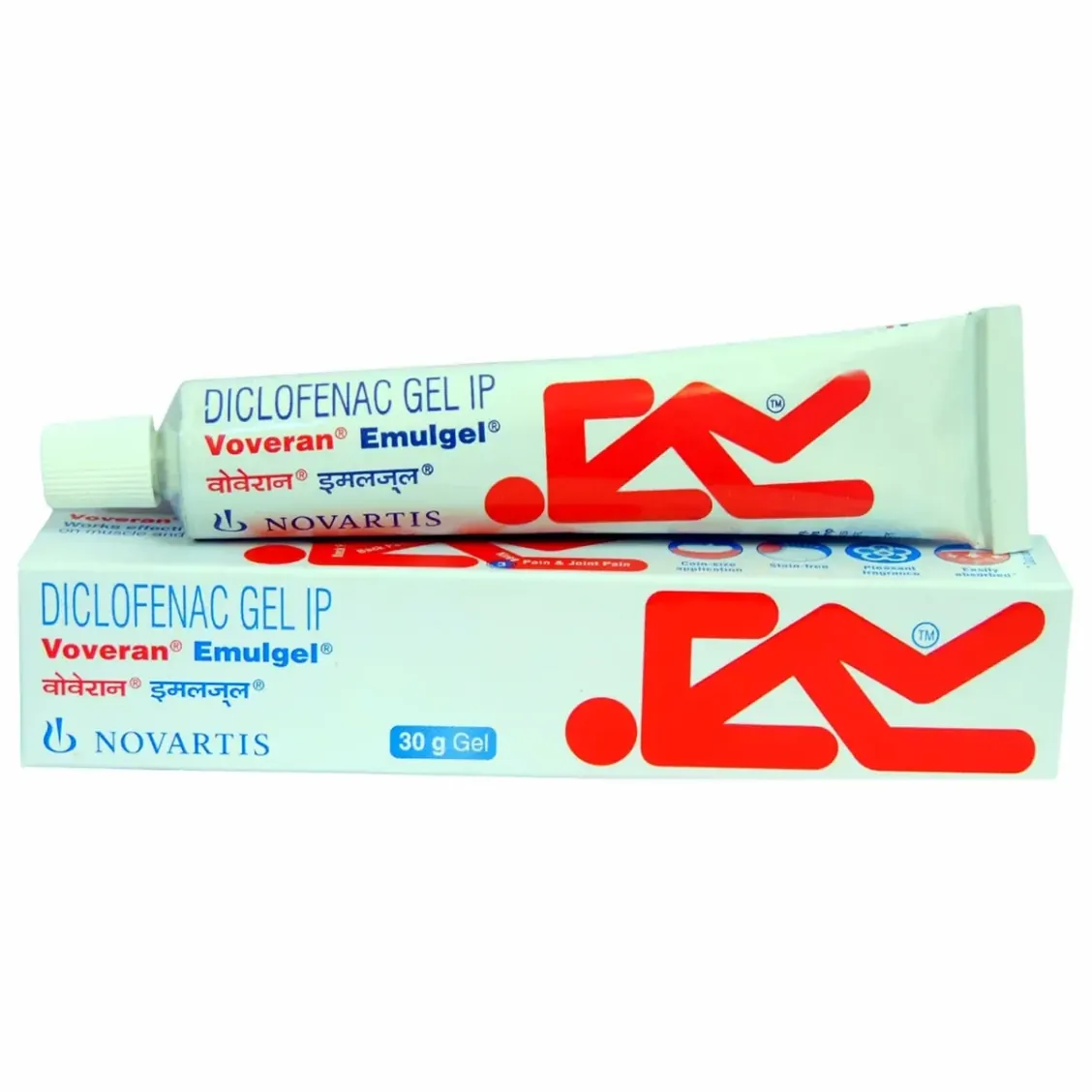
If the pain is in one knee, swallowing a tablet sends the drug through your whole body to reach one joint.
A gel puts it where the problem is. Same active ingredient, a fraction of the amount reaching the rest of you.
Without prescription, plain packaging. Rub it in properly and mind the sun.
Anti-inflammatory painkillers work. They also carry stomach, kidney and cardiovascular risks, and those risks come from the drug circulating through the body.
Applied to the skin, only a small fraction reaches the general circulation. Enough gets into the local tissue to be effective; far less goes everywhere else.
Which means a considerably better risk profile for the same local effect — particulary relevant for older people, anyone with a previous ulcer, or those on blood thinners.
For localised joint and soft tissue pain, this is often the sensible first choice rather than a last resort.
Where it works well, and where it does not
Works well: joints close to the surface — knees, hands, wrists, elbows, ankles, feet. Also tendon inflammation, sprains, strains and bruising.
Works less well: deep joints like the hip, where there is too much tissue between the skin and the problem. Also widespread pain affecting many areas, where a tablet makes more sense.
Hand and knee osteoarthritis are where topical treatment performs best, and both are common.
Applying it properly
Clean, dry, intact skin.
Apply the stated amount — more is not better.
Rub it in thoroughly untill it has largely disappeared.
Wash your hands afterwards, unless the hands are what you are treating.
Do not cover with an airtight dressing unless told to.
Three or four times daily, as directed.
Rubbing it in matters. Gel sitting on the surface is not being absorbed, and most of the dose is wasted.
Not on broken skin, open wounds, eczema or infected areas — absorption there is unpredictable and much higher.
It makes skin sensitive to sunlight
A specific point about diclofenac applied topically, and one people are not usually warned about.
Treated skin becomes more reactive to sunlight. You can burn faster than expected on the treated area, and some people get a rash there.
So keep treated areas covered in strong sun, or use sun protection on them. This catches people out on holiday — rubbing gel into a knee and then sitting in the sun.
It still counts as an anti-inflammatory
Important, because the low systemic absorption leads people to treat it as having no limits.
Some does get absorbed. Which means:
Do not use it alongside oral anti-inflammatory tablets without advice — the doses add
Care if you take blood thinners
Care with existing kidney problems
Avoid if aspirin has ever triggered asthma
Avoid in later pregnancy
Using the gel and taking tablets at the same time is a common mistake, made precisely because the gel seems harmless.
How it works
Damaged tissue produces prostaglandins, which amplify inflammation and sensitise nerve endings.
Diclofenac blocks the enzyme producing them. Less inflammation, less swelling, less pain signalling from that area.
Possible side effects
Local skin irritation or redness
Itching
Dryness or scaling
Sun sensitivity on treated skin
Rarely, a contact allergy
Mild stinging early on is common. A spreading rash, blistering or significant swelling means stopping.
What helps alongside
Movement within tolerance — rest beyond a day or two usually makes joint pain worse
Strengthening the muscles around the joint, which genuinely reduces load
Losing excess weight for knee and hip pain
Heat for stiffness, cold for acute swelling
Appropriate footwear
The strengthening point is the one with the best evidence in knee osteoarthritis, and it is the one most people skip.
Ordering without prescription: how it works
A tube lasts a while, which is why most people keep one rather than buying when something flares.
Pick the strength and the pack size, put in a delivery address, confirm. Couple of minutes, any time of day, no queue and no conversation across a counter.
It goes out in plain packaging. No pharmacy name on the outside, nothing that hints at what is inside. How long delivery takes depends on where the parcel is headed.
On price it comes down to strength and pack size. Larger packs generally work out better per unit.
What you pay follows pack size and strength, shown in pounds next to the quantity options. Bigger packs come out lower per unit. A generic stays below the branded version with the same ingredient inside.