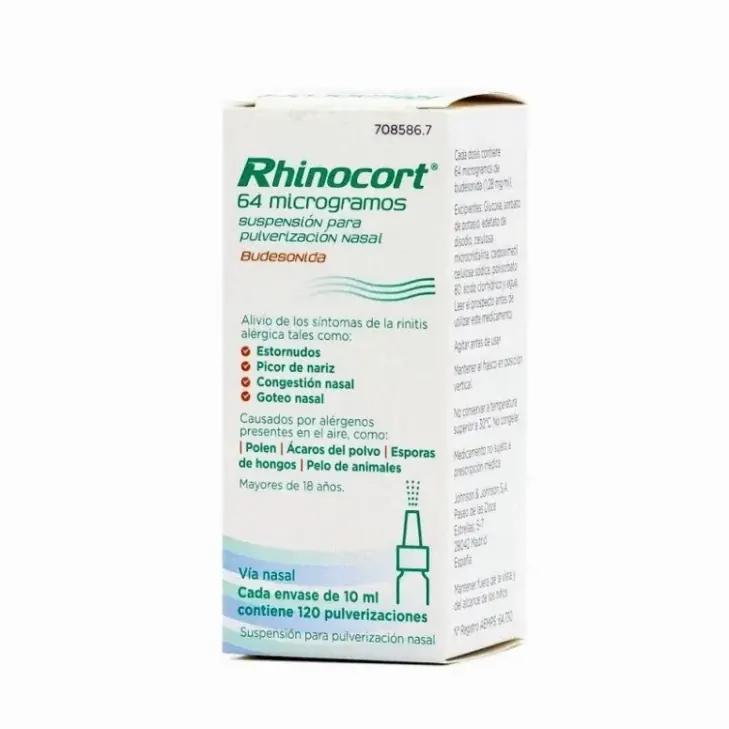
If tree pollen, animal dander, or dust mites leave your nose clogged and dripping, Rhinocort Nasal Spray soothes that inflammation right where it begins. It delivers budesonide directly into the nasal mucosa so you can carry on with your day without constant sneezing.
At PharmaAccess, you can explore brand-name and generic budesonide products with straightforward ordering and discreet delivery right to your address.
When seasonal allergies flare up, dealing with itchy eyes, continuous sneezing, and clogged airways gets exhausting very quickly. Many people decide to buy Rhinocort Nasal Spray because it works directly on the nasal tissue rather than circulating everywhere through your bloodstream the way oral antihistamines do.
What makes Rhinocort Nasal Spray work for allergies?
Rhinocort Nasal Spray relies on the active compound budesonide. Budesonide is a synthetic corticosteroid, which means it reduces swelling and dampens localized immune reactions. In this spray, it is formulated as a micronized aqueous suspension, releasing 32 mcg of budesonide per metered actuation.
So what is Rhinocort Nasal Spray used for in daily life? When pollen, animal hair, or mold spores hit your nasal lining, local mast cells and eosinophils dump inflammatory chemicals like histamine and leukotrienes. That burst of chemicals triggers fluid buildup, congestion, and constant dripping. Unpleasant, to say the least.
Budesonide binds to glucocorticoid receptors inside those irritated cells, halting the transcription of inflammatory genes. Because you administer it right where the irritation sits, only about 34% of the drug ever enters systemic circulation. The rest stays right on the mucosa, quieting the tissue down without knocking you out with drowsiness.
How should you handle Rhinocort Nasal Spray dosage?
Learning how to take Rhinocort Nasal Spray properly is straightforward, though staying regular with application is what actually makes it work. For adults and adolescents aged 12 and older, the common starting dose is 64 mcg in each nostril once daily. That equals two sprays of the 32 mcg strength per side every morning, or one puff if using Rhinocort Nasal Spray 64 mcg formulations.
When severe congestion strikes, prescribers sometimes bump the initial regimen up to 128 mcg per nostril once daily. After symptoms settle, dropping down to a lower maintenance dose helps keep control without excess medication. When treating nasal polyps, physicians frequently advise 64 mcg per nostril twice daily or 128 mcg once daily. The daily total should not exceed 256 mcg.
How do you spray it properly?
Gently clear your nostrils by blowing your nose beforehand.
Give the container a firm shake before opening.
If the bottle is fresh out of the box or unused for several days, prime it into the air until a uniform mist appears.
Tilt your head forward, insert the tip, and aim slightly outward toward the lateral wall rather than the center divider.
Depress the pump smoothly while inhaling gently through your nose, then let the breath out through your mouth.
Wipe the nozzle clean with dry tissue and replace the cap.
Never aim directly at your nasal septum in the midline, as that habit significantly raises the chances of localized crusting and nosebleeds.
What should you expect when using the spray?
Do not expect instant unblocking like you get with OTC oxymetazoline decongestants that open your nose in ninety seconds flat. Inhaled steroids require patience. Some people notice minor relief after ten hours, but establishing meaningful control typically takes 3 to 7 days of uninterrupted dosing. Maximum therapeutic benefit may take up to two weeks.
The trade-off is well worth it. Unlike standard decongestants that trigger rebound swelling if used past three days, budesonide is safe for ongoing maintenance. Each morning spray gives roughly 24 hours of anti-inflammatory coverage, so a single morning routine keeps symptoms suppressed through the entire day.
Are there common Rhinocort Nasal Spray side effects?
Most Rhinocort Nasal Spray side effects remain confined to the nasal passages. Since systemic absorption is modest, full-body reactions are uncommon unless somebody takes excessive amounts for many months at a stretch.
Common local symptoms include:
Nasal dryness, light stinging, or burning after application
Occasional minor nosebleeds (epistaxis)
Bouts of sneezing immediately following a spray
Throat irritation or mild cough from back-drainage
Transient unpleasant taste or scent
Light headaches
Heavy, prolonged exposure at elevated doses can occasionally promote systemic complications like increased intraocular pressure, cataracts, or impaired wound healing. In pediatric cases, persistent steroid therapy can slightly slow down growth velocity, so annual pediatric checkups remain a sensible precaution.
Who needs to avoid taking budesonide?
You must not take budesonide if you have a documented allergy to the compound or any inactive stabilizing ingredients in the suspension. Furthermore, individuals suffering from untreated viral, fungal, or bacterial nasal infections should hold off, since local corticosteroids temporarily dampen the immune defense needed to clear an active bug.
Exercise caution if you recently experienced nasal trauma or underwent sinus surgery. Steroids slow tissue granulation and repair. It is also important to tell your pharmacist if you take potent CYP3A4 inhibitors such as itraconazole, ketoconazole, clarithromycin, or ritonavir. Those agents slow down hepatic clearance of budesonide, leaving higher concentrations in circulation. Skipping grapefruit juice is smart for that same reason.
Can you buy Rhinocort Nasal Spray without prescription?
In many regions, lower strength budesonide formulations are sold over the counter, while patients looking to buy Rhinocort Nasal Spray 64 mcg or specific multi-packs may require a prescription depending on local regulations. Determining whether the medication is sold without prescription largely comes down to regional pharmacy rules.
Using a trusted Rhinocort Nasal Spray online pharmacy like PharmaAccess lets you buy Rhinocort Nasal Spray online and browse available options right from home. You can compare original branded units against generic budesonide sprays, which deliver the exact same active drug and clinical bioequivalence at a lower price because you skip commercial packaging markups.
Where can you find Rhinocort Nasal Spray fast delivery?
When sudden weather shifts trigger bad pollen spikes, nobody wants to wait weeks for relief to arrive. If you want to order Rhinocort Nasal Spray online without stress, PharmaAccess offers dependable dispatch and speedy fulfillment. Every order arrives in plain, discreet cartons so your personal medical purchases remain entirely private.
Buying larger bundle packs also tends to offer the Rhinocort Nasal Spray best price per bottle. Keeping an extra bottle in your cabinet prevents gaps in treatment right when seasonal allergens are at their worst.
Frequently Asked Questions
Can I use Rhinocort Nasal Spray with food?
Yes, meal timing does not matter. The medication works topically inside your nose, meaning food consumption or empty stomachs do not alter its effectiveness in any way.
What should I do if I miss a dose?
Administer the missed dose as soon as you recall during the day. If it is already close to your next scheduled morning spray, skip it entirely and continue on your regular timeline. Never double up sprays to make up for a forgotten day.
Can kids use this nasal spray?
Budesonide spray is typically permitted for children aged 6 and older under adult supervision. An adult should administer the spray, and regular height checks with their pediatrician help monitor normal growth during long-term use.
How long can I keep using it?
Many patients use budesonide daily through entire pollen seasons spanning three to six months. Just schedule an occasional visit with your doctor if you plan on year-round use to make sure your nasal passages remain clear and healthy.