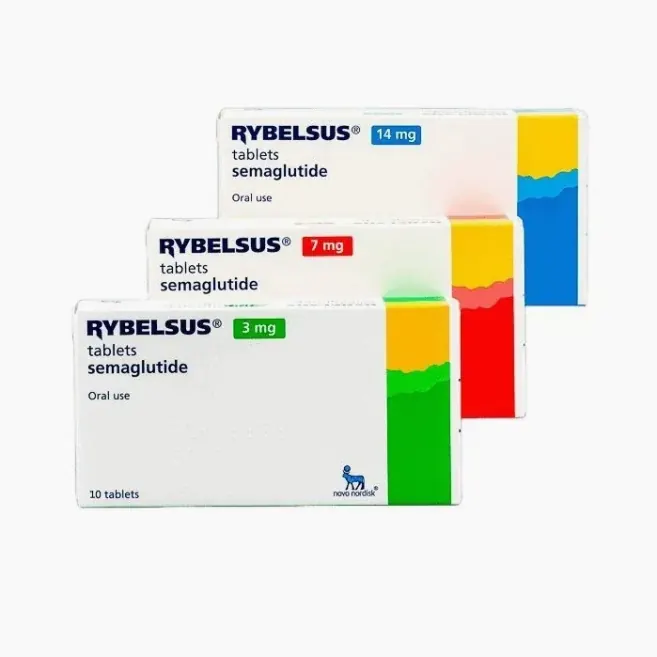
GLP-1 medicines changed diabetes treatment, but they came as weekly injections. For plenty of people that was the barrier.
Semaglutide in tablet form does the same job, provided you follow the timing rules exactly.
Without prescription, plain packaging. The morning routine is strict and not negotiable.
GLP-1 is a peptide — a small protein. Swallow a protein and your digestive system treats it as food and destroys it. That is why these drugs were injections for years.
This tablet includes an absorption enhancer that briefly protects the molecule and helps it cross the stomach lining before it gets broken down.
It works. But it only works under quite narrow conditions, which is why the timing instructions are unusually strict.
The morning routine, exactly
Get this wrong and the tablet does very little. There is no way to tell from how you feel.
First thing in the morning, on a completly empty stomach.
With no more than half a glass of plain water. Not a full glass.
Then wait at least half an hour before eating, drinking anything else, or taking other medicines.
Swallow whole. Do not split, crush or chew.
Too much water dilutes it and absorption drops. Food too soon does the same. Other tablets taken at the same time interfere.
It is fussy, and it is the single most common reason this medicine underperforms.
What GLP-1 does
GLP-1 is a hormone your gut releases when food arrives. Semaglutide mimics it, but resists the enzyme that normally clears it within minutes.
Four effects, working together.
It prompts insulin release — but only when blood sugar is raised, which is why it rarely causes hypos on its own. It suppresses glucagon, so the liver stops pouring out glucose. It slows stomach emptying, which flattens the post-meal spike. And it acts on appetite centres in the brain, reducing hunger.
The appetite effect is why weight loss is common, and why this class moved well beyond diabetes.
Nausea, and how to get through it
The most common side effect by a distance, and the main reason people stop.
It comes largely from slowed stomach emptying. Food sits longer, and you feel full and queasy.
It is usually worst in the first weeks and after each dose increase, and it generally settles.
Smaller meals, more often
Stop eating when you feel full rather than finishing the plate
Avoid very fatty or very large meals
Eat slowly
Keep fluids up, in small amounts
Do not rush the dose increases
Persistent vomiting matters, because dehydration can affect the kidneys. Report it rather than enduring it.
Warnings worth knowing
Pancreatitis. Severe persistent abdominal pain going through to the back, with vomiting. Stop and seek urgent help.
Gallbladder problems. More likely with rapid weight loss. Pain under the right ribs, particularly after fatty food, with nausea.
Thyroid. This class is not used in people with a history of medullary thyroid cancer or a particular inherited endocrine syndrome. A new lump in the neck, hoarseness or difficulty swallowing should be checked.
Eyes. In people with existing diabetic retinopathy, rapid improvement in blood sugar can temporarily worsen it. Eye checks matter during treatment.
It changes how other tablets are absorbed
Slowed stomach emptying affects everything else you swallow.
Combined with the half-hour rule after the dose, this means any other regular medication needs planning rather than being taken whenever.
Worth mentioning specifically if you take thyroid medication, which is already sensitive to timing and to anything else in the stomach.
Possible side effects
Nausea, vomiting
Diarrhoea or constipation
Reduced appetite
Abdominal discomfort, reflux
Fatigue
Headache
Low blood sugar is uncommon alone but likely in combination with insulin or sulfonylureas, where those doses usually need reducing.
Ordering without prescription: how it works
The morning routine only works if the tablet is there every morning, which makes supply the practical issue.
Pick the strength and the pack size, put in a delivery address, confirm. Couple of minutes, any time of day, no queue and no conversation accross a counter.
It goes out in plain packaging. No pharmacy name on the outside, nothing that hints at what is inside. How long delivery takes depends on where the parcel is headed.
On price it comes down to strength and pack size. Larger packs generally work out better per unit.
A parcel locker or a work address works as well as home for UK delivery, provided the details are complete and the name is on the door. The plain packaging is unchanged either way.