Anti-inflammatory painkillers work by blocking an enzyme. The same enzyme makes the substances that protect your stomach lining.
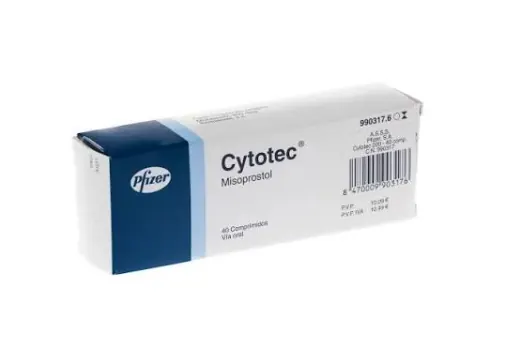
Misoprostol replaces those substances directly, which is why it protects where ordinary acid reducers only partly do.
Without prescription, plain packaging. Absolutely contraindicated in pregnancy.
What trade-off is built into anti-inflammatory painkillers?
Worth understanding, because it explains why this drug exists at all.
Anti-inflammatory painkillers block an enzyme called COX. That stops the production of substances driving pain and inflammation, which is the point.
But the same enzyme also produces prostaglandins that protect the stomach. They maintain the mucus layer, stimulate protective bicarbonate, and keep blood flow to the lining healthy.
Block the enzyme and you lose that protection along with the pain. The lining becomes vulnerable to the acid that is always present.
Hence erosions, and eventually ulcers, in people taking these painkillers long term.
Putting the protection back
Misoprostol is a synthetic version of one of those protective prostaglandins.
It restores mucus and bicarbonate production, improves blood flow to the lining, and reduces acid secretion somewhat.
That is a different approach from acid-reducing drugs, which lower the attack but do not restore the defence. For damage caused specifically by losing prostaglandins, replacing them directly addresses the actual problem.
Who it is for
People on long-term anti-inflammatory painkillers, particulary for arthritis
Those at higher risk — older age, previous ulcer, also on steroids or blood thinners
Prevention rather than treatment of an existing ulcer
Prevention is the key word. It is taken alongside the painkiller to stop damage developing, not started after an ulcer has already formed.
Absolutely not in pregnancy
This is the most important paragraph on the page and it is not a routine caution.
Misoprostol causes contractions of the uterus. In pregnancy that can cause miscarriage, premature labour, uterine rupture and serious harm to the baby.
It must not be taken by anyone who is pregnant. Anyone who could become pregnant needs reliable contraception throughout, and should be certain they are not pregnant before starting.
If pregnancy occurs while taking it, stop immediately and get medical advice without delay.
The drug does have recognised uses in obstetric care, but those are hospital procedures carried out under direct medical supervision with monitoring. That is a completely different situation from taking tablets at home, and nothing on this page should be read as guidance for it.
Diarrhoea is the usual problem
The most common side effect, and the main reason people stop.
It comes from the same prostaglandin activity acting on the intestine — increasing secretion and speeding things up.
What reduces it:
Take it with food, every time
Start at a lower dose and build up
Spread doses through the day rather than taking larger ones
Avoid magnesium-containing antacids, which add to the effect
It usually settles after the first week or two. Severe or persistent diarrhoea causing dehydration needs reviewing.
Possible side effects
Diarrhoea
Abdominal cramping
Nausea
Flatulence
Headache
Spotting or irregular bleeding in women
Heavier or more painful periods
Signs the stomach is already damaged
Know these, because this medicine is about preventing exactly this.
Black, tarry stools
Vomiting material resembling coffee grounds
Sudden severe abdominal pain
Unexplained pallor, weakness or breathlessness
Persistent indigestion that is getting worse
Those are urgent. A bleeding ulcer can be the first sign of damage, with no warning indigestion beforehand.
The other question worth asking
If you are taking anti-inflammatory painkillers long enough to need stomach protection, it is reasonable to ask whether there is an alternative for the pain itself.
Sometimes there is not, and then protection is the right answer. But it is a question worth putting rather than assuming.
Ordering without prescription: how it works
Protection only works while the painkiller is being taken, so the two supplies need to match up.
Pick the strength and the pack size, put in a delivery address, confirm. Couple of minutes, any time of day, no queue and no conversation accross a counter.
It goes out in plain packaging. No pharmacy name on the outside, nothing that hints at what is inside. How long delivery takes depends on where the parcel is headed.
On price it comes down to strength and pack size. Larger packs generally work out better per unit.
What you pay follows pack size and strength, shown in pounds next to the quantity options. Bigger packs come out lower per unit. A generic stays below the branded version with the same ingredient inside.