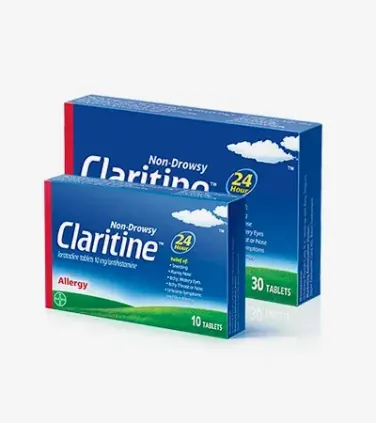
Itching is the symptom that wears people down. It interrupts sleep, and nothing else gets a look in while it is happening.
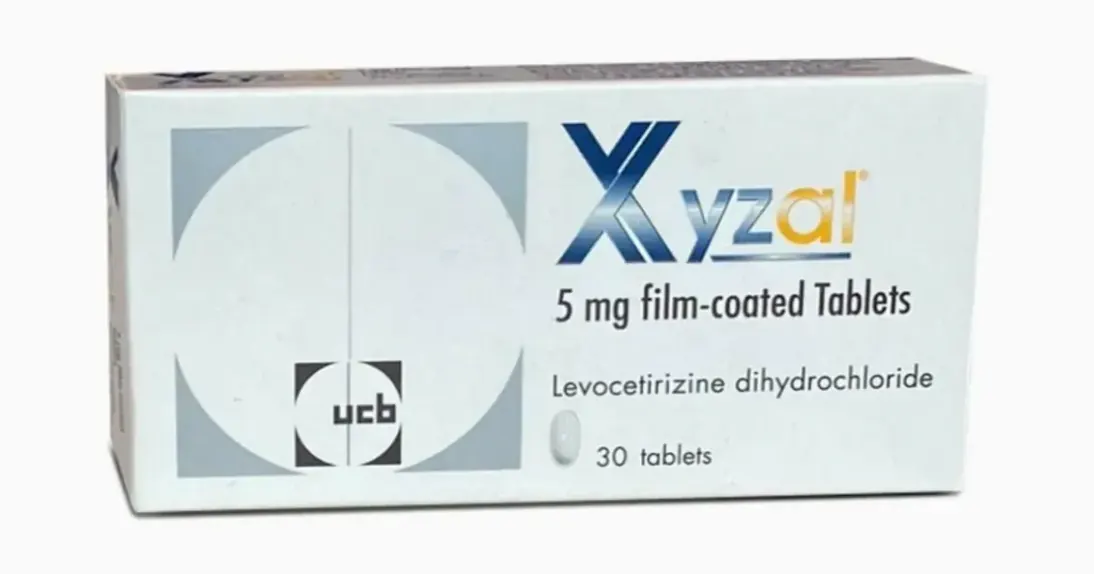
Levocetirizine is the active half of an older antihistamine, and it binds tightly to the receptor — which is why it holds up against hives.
Without prescription, plain packaging. Take it in the evening.
Many molecules exist in two mirror-image forms, like a left and a right hand. Usually only one of them fits the target.
The older antihistamine cetirizine contains both. Only one half does the work; the other is largely along for the ride.
Levocetirizine is that working half on its own. Same effect from a smaller amount of material, and less of the inactive form for the body to deal with.
It also binds to the histamine receptor tightly and stays put, which is part of why it performs well on itching specifically.
What it is used for
Seasonal hay fever
Year-round allergic rhinitis
Chronic hives that come and go for months
Allergic itching of the skin
Itchy, watering eyes
Hives are where it tends to earn its place. Some people need a daily antihistamine for months to keep the welts suppressed, and this is one of the ones that holds up over that kind of stretch.
Why is evening the right time?
Two good reasons, and they both point the same way.
First, this one causes more drowsiness than some of the alternatives. Not heavy sedation, but enough that people notice. Taking it at night turns that from a problem into a non-issue.
Second, itching and nasal symptoms are typically worst in the early hours. An evening dose puts the peak level roughly where you need it.
And if you are being kept awake by itching, a bit of drowsiness is hardly a drawback.
How to take it
One tablet in the evening.
With or without food.
Swallow whole with water.
Same time each day, steadily, rather than only on bad days.
No alcohol — it amplifies the drowsiness considerably.
Reduced kidney function matters here, since the drug is cleared largely by the kidneys. If yours are impaired, the dose needs adjusting rather than assuming.
Start before the worst of it, not during
This is where most people get hay fever treatment wrong.
They reach for something once the eyes are streaming and the nose has packed up. By then histamine has already done its work and the tissue is swollen.
Starting a few days ahead of your usual season, and then taking it steadily rather than only on bad days, works a lot better. The reaction never builds up the same momentum.
Nobody prints that on the front of the box, and it probably matters more than which brand you pick.
Possible side effects
Drowsiness — more common than with some alternatives
Dry mouth
Headache
Tiredness
Occasional nausea
Find out how it affects you before driving. The first few days are usualy the most noticable, and it often eases after that.
On stopping it after a long stretch
Worth knowing if you have been taking an antihistamine daily for months, which is common with hives.
Some people get a flare of itching in the days after stopping abruptly. It is not dangerous and it settles, but it is unpleasant and it gets mistaken for the condition returning.
Tapering down rather than stopping dead tends to avoid it.
What makes hives worse
Heat, hot showers, overheated rooms
Tight clothing and pressure on the skin
Alcohol
Stress, which is a bigger factor than most people expect
Certain painkillers
Scratching, which releases more histamine and keeps the loop going
Chronic hives often have no identifiable trigger at all, and hunting for one can become its own source of stress. Controlling the symptom is usually the more productive route.
When to get help urgently
Swelling of the lips, tongue or throat. Difficulty breathing or swallowing. Widespread hives together with faintness, dizziness or a drop in blood pressure.
Those are not a bad allergy day. They need help immediately.
Ordering without prescription: how it works
Hives often need treating for months rather than weeks, so bigger packs make practical sense.
Pick the strength and the pack size, put in a delivery address, confirm. Couple of minutes, any time of day, no queue and no conversation across a counter.
It goes out in plain packaging. No pharmacy name on the outside, nothing that hints at what is inside. How long delivery takes depends on where the parcel is headed.
On price it comes down to strength and pack size. Larger packs generally work out better per unit, and over a long season that gap adds up.
A parcel locker or a work address works as well as home for UK delivery, provided the details are complete and the name is on the door. The plain packaging is unchanged either way.