People lump all clot medicines together. They are not the same, and the difference changes what they are used for.
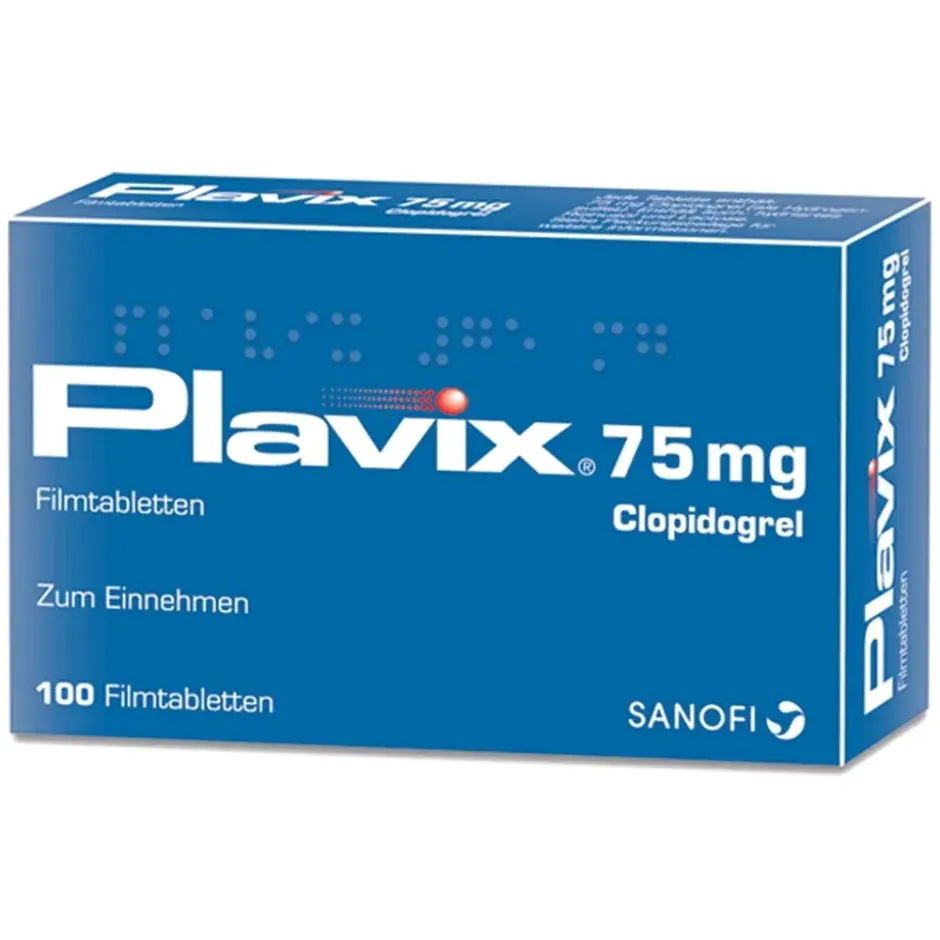
Clopidogrel stops platelets sticking to each other — the mechanism behind clots forming on damaged artery walls and stents.
Without prescription, plain packaging. Stopping this one early after a stent is genuinely dangerous.
Worth understanding, because it explains why there are two seperate categories of medicine.
In fast-moving arterial blood, clots form when platelets stick to a damaged surface and then to each other. A pile-up at the site of injury.
In slow-moving venous blood, clots form through the clotting cascade — a chain of proteins producing a fibrin mesh.
Antiplatelet drugs like this one target the first. Anticoagulants target the second.
That is why clopidogrel is used after stents and strokes, while a different class is used for atrial fibrillation and leg clots. They are not interchangeable.
Blocking the activation signal
Platelets have receptors that respond to a signalling molecule called ADP. When ADP binds, the platelet changes shape, becomes sticky and recruits others.
Clopidogrel blocks that receptor permanently, for the life of the platelet.
Platelets live about a week to ten days. Which means two things: the full effect builds over several days, and the effect persists for days after stopping, until new platelets have replaced the blocked ones.
That is why surgeons want it stopped well in advance of an operation, and why you cannot simply reverse it on demand.
After a stent: do not stop early
If there is one thing to take from this page, this is it.
A newly placed stent is a bare metal surface inside an artery. Until the vessel lining grows over it, that surface is intensely attractive to platelets.
Stopping antiplatelet treatment during that window can cause the stent to block suddenly. That is a heart attack, with a high risk of being fatal, and it happens fast.
The duration of treatment is decided deliberately based on the type of stent and the situation. It is not a guess and it is not negotiable on a whim.
Dental work, minor surgery, an endoscopy — all of that gets planned with whoever is doing the procedure, in advance. Never stopped unilaterally.
Taking it
One tablet daily, same time.
With or without food.
Often combined with low-dose aspirin for a defined period.
Missed a dose: take it when you remember unless the next is close. No doubling.
Stomach protection is usualy part of it
Antiplatelet treatment, especially combined with aspirin, increases the risk of bleeding from the stomach lining.
A stomach protecting medicine is often added for that reason. There has been debate about which ones interact least with clopidogrel, so it is worth the combination being chosen deliberately rather than at random.
Signs of a bleed: black tarry stools, vomit resembling coffee grounds, sudden pallor and weakness, unexplained breathlessness. Those are urgent.
Bleeding risk in daily life
Bruising more easily than before
Nosebleeds and bleeding gums
Cuts taking longer to stop
Heavier periods
Practical adjustments: soft toothbrush, electric razor, care with knives and tools, and thinking twice about contact sports.
Tell every dentist and doctor you are taking it. And take any head injury seriously even if you feel fine afterwards — bleeding inside the skull can declare itself hours later.
What to avoid combining
Anti-inflammatory painkillers, which add their own bleeding risk
Other blood thinners, unless specifically intended
Some antidepressants, which affect platelets too
Herbal products including ginkgo, garlic supplements and high-dose fish oil
Paracetamol is generally the safer everyday painkiller here.
Possible side effects
Easy bruising and minor bleeding
Abdominal discomfort, indigestion
Diarrhoea
Rash or itching
Headache
Rarely, serious blood disorders occur. Unexplained widespread bruising, a purple pinpoint rash, fever with confusion, or marked unexplained weakness need urgent assessment.
Ordering without prescription: how it works
Protection depends entirely on taking it without gaps, which is why people order well before running out.
Pick the strength and the pack size, put in a delivery address, confirm. Couple of minutes, any time of day, no queue and no conversation across a counter.
It goes out in plain packaging. No pharmacy name on the outside, nothing that hints at what is inside. How long delivery takes depends on where the parcel is headed.
On price it comes down to strength and pack size. Larger packs generally work out better per unit, which matters on something taken long term.
What you pay follows pack size and strength, shown in pounds next to the quantity options. Bigger packs come out lower per unit. A generic stays below the branded version with the same ingredient inside.