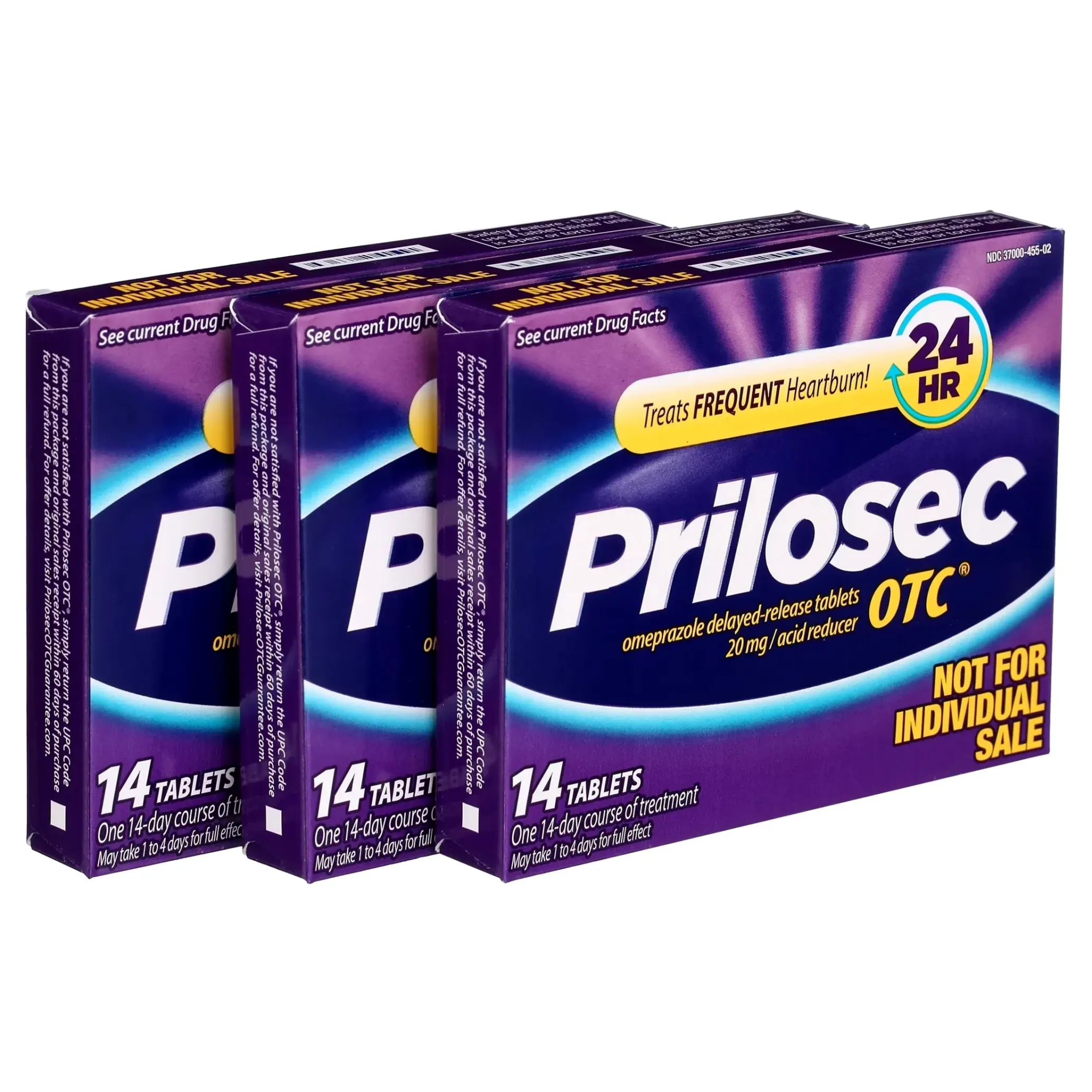
Omeprazole has been around long enough that most people know the name, even if they are hazy on what it does.
It permanently disables the pumps that produce stomach acid, which is why the effect lasts far longer than the drug stays in your blood.
Without prescription, plain packaging. Take it before breakfast.
Protecting the stomach during anti-inflammatory painkiller treatment
Part of combination treatment for ulcer-causing bacteria
Conditions involving excessive acid production
How is a pump disabled for good?
Acid-producing cells in the stomach lining have a pump that moves acid into the stomach. It is the final common step, whatever triggered production.
Omeprazole binds to active pumps and disables them irreversibly.
The cell has to build new pumps to restore production, which takes considerable time. That is why the effect lasts about a day from a drug that is cleared from the blood within hours.
It also explains the before-breakfast rule, since only active pumps can be blocked.
Before breakfast, every day
Half an hour to an hour before the first meal.
Swallow the capsule whole.
Same time daily.
Several days before full effect.
Pumps switch on in response to food arriving. The drug needs to be present at that moment. Taken after eating, most of that activation wave has already passed.
If swallowing is difficult, the capsule can be opened and the granules stirred into soft food — swallowed without chewing, since the coating protects them from stomach acid.
Interactions worth knowing
Omeprazole affects a liver enzyme that processes other medicines, and it also changes stomach acidity, which affects how some drugs are absorbed.
Clopidogrel — the interaction here is the most discussed, and an alternative acid reducer is often chosen
Some antifungals, which need stomach acid to be absorbed
Certain HIV medicines
Methotrexate
Iron supplements, absorbed less well
Warfarin, which may need monitoring
If you take clopidogrel after a stent, this combination is worth raising specifically rather than assuming it is fine.
Stopping it: taper, do not quit
A problem people run into without understanding why.
During prolonged acid suppression the body increases the signals driving acid production. Stop abruptly and those signals act on a stomach that can suddenly make acid again.
The result is a surge of heartburn worse than the original problem. It is a rebound effect, not proof that the condition was always that bad.
It usually settles within a couple of weeks. Reducing gradually, or switching to an H2 blocker on the way down, avoids most of it.
Long-term use, honestly
Many people stay on these for years without ever revisiting the decision.
Points worth knowing: reduced absorption of B12, magnesium and possibly calcium; a modest increase in some gut infections since acid is a natural barrier; and an association with fractures over many years of use.
None of that argues against taking it where it is needed. It argues for reviewing periodically rather than continuing by inertia.
Possible side effects
Headache
Diarrhoea, constipation or wind
Abdominal pain
Nausea
Dizziness
Rash
Report persistent diarrhoea, muscle cramps or unusual weakness, which can indicate low magnesium with long use.
Measures that reduce the need for it
No eating within about three hours of bed
Smaller meals
Head of the bed raised on blocks
Weight loss around the abdomen
Less alcohol, coffee, chocolate, mint, fatty food
Stopping smoking
Red flags that need investigating, not treating
Difficulty or pain swallowing
Food sticking on the way down
Unexplained weight loss
Vomiting blood, or material like coffee grounds
Black, tarry stools
Persistent vomiting
New symptoms starting after middle age
Anaemia found on a blood test
Acid suppression can mask those by relieving the discomfort while whatever is behind it continues. That is the main argument against simply taking something indefinitely and never getting looked at.
Ordering without prescription: how it works
Daily dosing before breakfast is the pattern, so most people order enough to cover the whole course.
Pick the strength and the pack size, put in a delivery address, confirm. Couple of minutes, any time of day, no queue and no conversation accross a counter.
It goes out in plain packaging. No pharmacy name on the outside, nothing that hints at what is inside. How long delivery takes depends on where the parcel is headed.
On price it comes down to strength and pack size. Larger packs generally work out better per unit.
Prices sit below a UK high street counter for an unglamorous reason: no rent in a good location, no counter staff, no window display. Most of the range is generic as well. That saving goes to you.
It works fine just like the ones from the grocery store, no real complaints there. But the shipping took almost two weeks to get here which was way longer than estimated. The box was kind of crushed when it arrived too, so I'll probably just buy it in person next time.