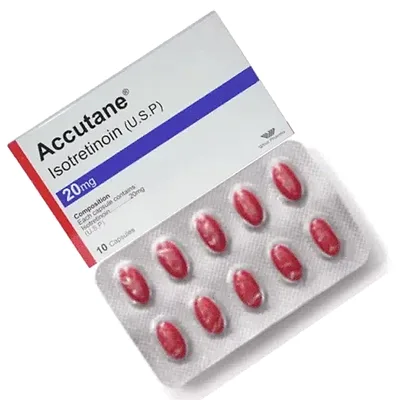
Blackheads form because the pore opening gets blocked with shed skin cells. An antibacterial cream cannot help with that, because bacteria are not the first problem.
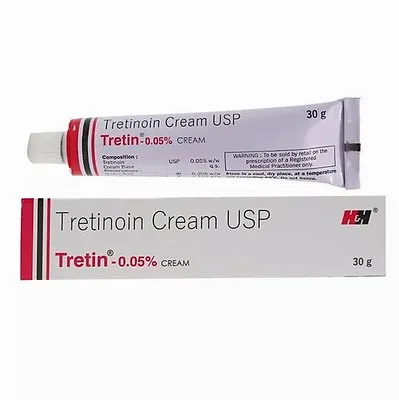
Tretinoin changes how the skin keratinises. Which is why it works where other things stop.
Without prescription, plain packaging. Expect the first weeks to be worse.
To understand why this works, it helps to know how a blackhead forms.
Every pore is lined with cells that shed continuously. Normally they come loose and are carried out with the oil.
In acne that process breaks down. The cells stick together too tightly and plug the opening. Oil accumulates behind the plug, bacteria thrive in the oxygen-poor space, and inflammation follows — a spot, sometimes a deeper lump.
Tretinoin is the acid form of vitamin A. It binds receptors inside the cell nucleus and alters which genes governing skin cell maturation are active.
The result: cells shed faster and stop clumping. Pores stay open, existing plugs are pushed out, and new ones do not form.
So this is not symptom management. It is intervening in the mechanism.
What it is used for
Acne with blackheads, papules and pustules
Skin prone to congested pores
Disorders of keratinisation
Uneven texture and enlarged pores
Fine lines and sun damage
Post-inflammatory marks
The anti-ageing effect is not coincidental — the same regulation also stimulates collagen production. That takes months rather than weeks.
The purge, and why people quit during it
Knowing this in advance is the difference between continuing and giving up.
In the first weeks skin usualy looks worse. More spots, redness, flaking, stinging, a tight feeling.
It is not an allergic reaction and it is not the product damaging your skin. Lesions that were already forming deeper down are being pushed to the surface earlier than they would have appeared.
It generally lasts a few weeks. Then it gradually improves, and a fair assessment is only possible after a couple of months.
People who have not been told this stop at precisely the wrong moment and conclude it does not work.
Starting without wrecking your skin
Evening only — the compound degrades in light.
Cleanse gently and wait until completly dry.
A pea-sized amount for the whole face. No more.
Begin every second or third evening.
Avoid the eye area, the corners of the mouth and the creases beside the nose.
Moisturiser afterwards.
The dry skin point is not a detail. On damp skin the compound penetrates far more and irritation rises disproportionately. Wait twenty minutes after washing.
More does not work better. It works the same and irritates more.
If it is too harsh: apply moisturiser before the tretinoin. That slows penetration and is what allows many people to tolerate it at all.
Daily sun protection, not optional
Retinoids make skin markedly more reactive to sunlight, and that creates two problems rather than one.
You burn faster than you expect. And sunlight triggers pigmentation — frequently the exact thing people are using this to improve.
High factor protection every morning, year-round, including on dull days. Skipping it undoes a real portion of what months of treatment achieve.
Sunbeds are out entirely while using it.
What not to combine
Acid exfoliants at the same time
Benzoyl peroxide in the same application — it degrades the compound
Alcohol-based toners
Physical scrubs
Waxing on treated areas
Benzoyl peroxide can still be used, just at a different time of day: that one in the morning, tretinoin in the evening.
Do not wax treated skin — it is thinner and can be torn off.
Pregnancy: not while using this
Vitamin A derivatives can harm a developing baby.
That covers pregnancy, trying to conceive and breastfeeding. Anyone who could become pregnant needs reliable contraception throughout.
If pregnancy occurs while using it, stop and get advice without delay.
Possible side effects
Redness, flaking, tightness
Stinging after application
Dry, sensitive skin
Temporary worsening of acne
Increased light sensitivity
Temporary lighter or darker patches
Significant swelling, blistering or weeping means stopping and getting advice.
Ordering without prescription: how it works
Treatment runs for months, so a larger pack avoids a gap at the worst possible point.
Pick the strength and the pack size, put in a delivery address, confirm. Couple of minutes, any time of day, no queue and no conversation across a counter.
It goes out in plain packaging. No pharmacy name on the outside, nothing that hints at what is inside. How long delivery takes depends on where the parcel is headed.
On price it comes down to strength and pack size. Larger packs generally work out better per unit.
Nothing is asked of a UK buyer beyond an address. No prescription to upload, no consultation, nobody ringing back to ask questions you did not invite. You pick the strength, you pick the quantity, that is it.