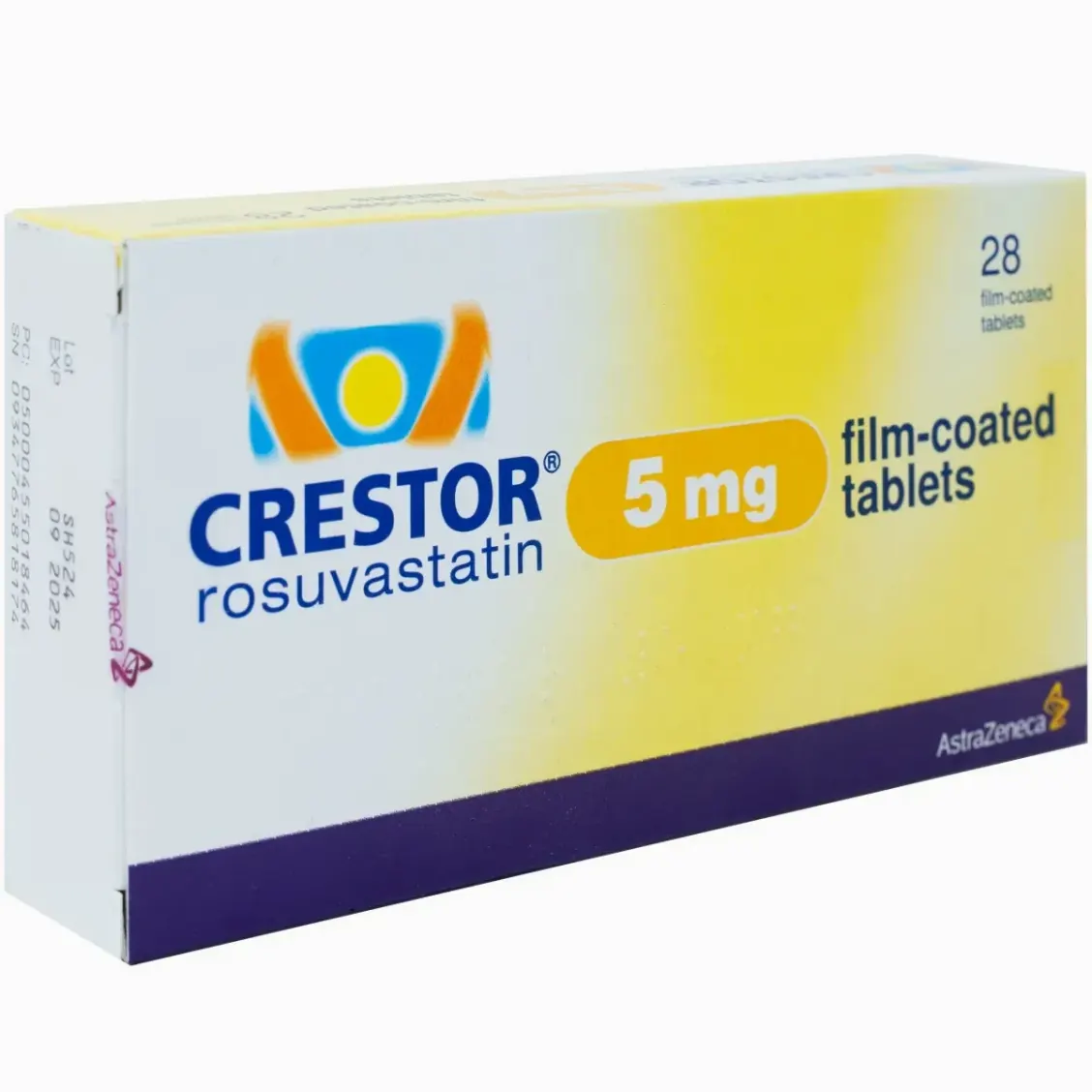
Statins work on the liver. For some people that is not enough, and for others it causes muscle aches they cannot live with.
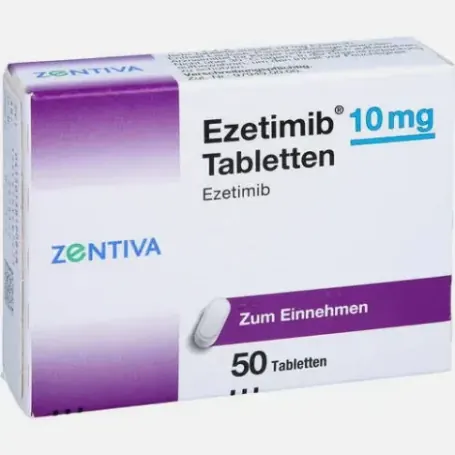
Ezetimibe attacks the problem from the other end — at the point where cholesterol crosses from the gut into the body.
Without prescription, plain packaging. One tablet, any time of day.
The cholesterol in your blood arrives by two routes.
Most of it is made by your liver. A smaller but still meaningful share is absorbed from food and from bile recycled back out of the gut.
Statins work on the first route. Ezetimibe works on the second.
Which means they do not compete — they add up. That is why combining them produces a bigger drop than increasing a statin dose would.
Blocking a specific doorway
Cholesterol does not simply diffuse accross the gut wall. It is carried through by a specific transport protein in the lining of the small intestine.
Ezetimibe blocks that transporter.
Less cholesterol crosses into the body. The liver notices the shortfall and compensates by pulling more LDL out of the bloodstream. Blood levels fall.
Important point: it blocks cholesterol specifically, not fat in general. It does not cause the oily stools or vitamin problems that fat-blocking drugs do.
Who it suits
People already on a statin who have not reached target
People who cannot tolerate statins because of muscle symptoms
People who can only tolerate a low statin dose
Those with a strongly inherited pattern of high cholesterol
Occasionally on its own, where a statin is unsuitable
The muscle-symptom group is where it earns most of its use. Adding ezetimibe to a low statin dose often works better than pushing the statin higher and being unable to stay on it.
Taking it
One tablet daily.
Any time of day — unlike some statins, timing is not critical.
With or without food.
If you also take a bile acid binder, seperate them by several hours.
That last point matters. Bile acid binders stick to things in the gut, ezetimibe included, and will simply carry it out of the body with them.
When you will see a change
Blood levels start shifting within a couple of weeks and settle after about a month.
You will not feel anything. There is nothing to feel. The only way to know whether it is working is a blood test — which is also why it is so easy to stop taking something like this without noticing any consequence for years.
Possible side effects
Abdominal pain
Diarrhoea
Tiredness
Muscle aches, though less often than with statins
Changes in liver blood tests, mainly in combination with a statin
It is generally well tolerated. Report persistent muscle pain with weakness, or yellowing of the skin or eyes.
What diet actually contributes
Since this drug works on absorbed cholesterol, the obvious question is whether diet does the same job.
Partly, and it is worth doing. Less saturated fat, more soluble fibre, oily fish, nuts, and plant sterols all help, and losing excess weight helps more than most single changes.
But the bulk of circulating cholesterol is produced internally, under largely genetic control. Someone can eat impeccably and still have a high reading, and that is not a failure of discipline.
Diet and medication are not alternatives here. They work on different parts of the same problem.
Why the number matters at all
High cholesterol causes no symptoms. Nothing hurts, nothing feels wrong.
What it does is slowly build plaque inside artery walls. The risk is not the narrowing — it is a plaque rupturing and a clot forming on the spot, blocking the vessel in seconds.
That is the event the treatment is aimed at, and it is why the target is a number rather than a symptom.
Ordering without prescription: how it works
This is a long-term tablet with no felt effect, which is exactly why a steady supply matters.
Pick the strength and the pack size, put in a delivery address, confirm. Couple of minutes, any time of day, no queue and no conversation across a counter.
It goes out in plain packaging. No pharmacy name on the outside, nothing that hints at what is inside. How long delivery takes depends on where the parcel is headed.
On price it comes down to strength and pack size. Larger packs generally work out better per unit, which matters on something taken long term.
What you pay follows pack size and strength, shown in pounds next to the quantity options. Bigger packs come out lower per unit. A generic stays below the branded version with the same ingredient inside.