Breathe Easier with Proven Daily Allergy Protection
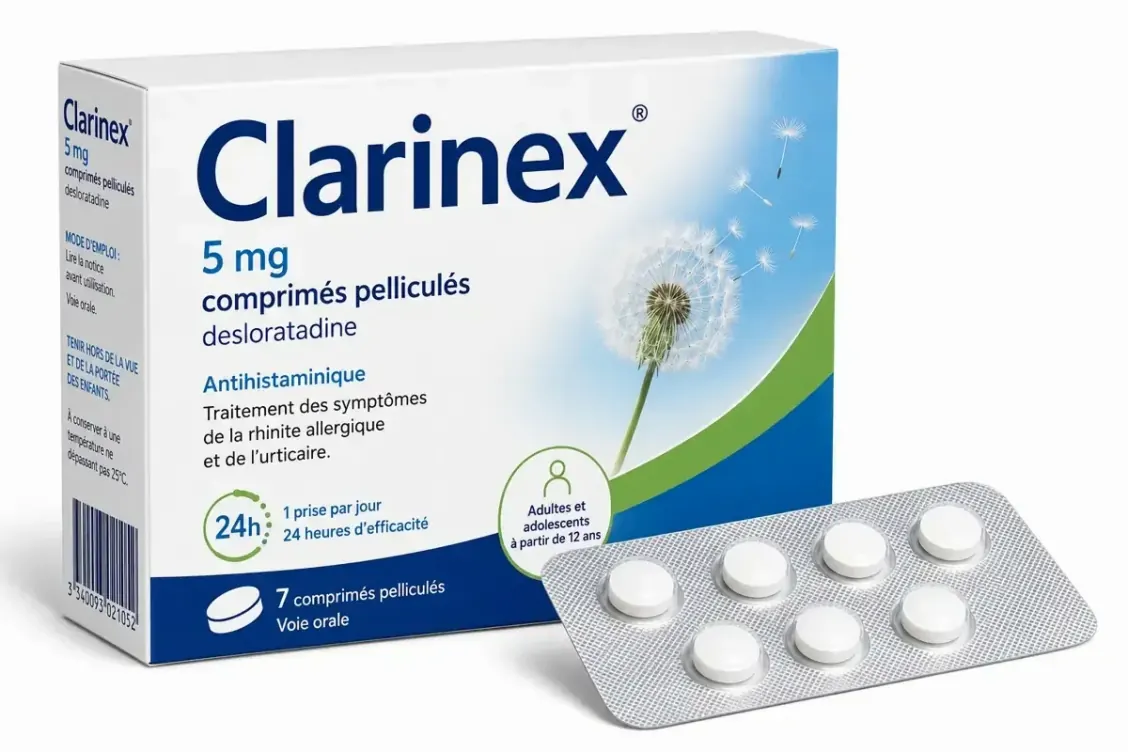
If you struggle with seasonal flare-ups or stubborn hives, you can buy Clarinex to get your routine back on track. This second-generation antihistamine operates quietly in the background, keeping itchy eyes, runny nose, and scratchy throat from ruining your morning. One small tablet provides steady comfort around the clock without leaving you drained or sleepy.
Reasons doctors suggest to buy Clarinex for daily allergies
Dealing with seasonal sniffles or persistent skin irritation gets exhausting very quickly. Clarinex is an antihistamine approved specifically to quiet those frustrating allergic responses before they run wild; patients often ask is Clarinex sold without prescription, but it remains an Rx medicine. Many clinicians recommend to buy Clarinex 5 mg because of one basic fact: it treats nasal problems like sneezing, stuffy nose, and postnasal drip alongside non-nasal misery like burning, watery eyes. That dual action saves people from taking two different pills.
It is also widely prescribed for chronic idiopathic urticaria, which is just the clinical name for unexplained hives that keep showing up without a clear trigger. If you have ever suffered through itchy red welts that erupt out of nowhere, you understand how maddening it gets. Clarinex helps reduce the total number of hives and shrinks their size, giving irritated skin a real chance to calm down. While some patients look to buy Clarinex online for regular refills, doctors caution that trying to buy Clarinex without prescription is unsafe.
Desloratadine is a second-generation antihistamine that barely crosses the blood-brain barrier under normal conditions. What does this mean during a busy workday? You get the symptom relief you need without fighting off heavy afternoon drowsiness. Staying alert while managing pollen exposure makes life far easier for drivers and office workers alike.
How Clarinex blocks histamine in your body
To see why this pill works, look at the biology of a common allergic flare. When microscopic pollen grains or animal dander enter your respiratory tract, your immune system overreacts and signals mast cells to release histamine. Once that chemical connects with peripheral H1 receptors scattered across your tissues, local blood vessels dilate, fluid seeps into surrounding areas, and you start sneezing or scratching uncontrollably.
The active ingredient here is desloratadine, the primary active metabolite of loratadine. Because the molecule is already in its active metabolic state, your liver does not have to spend energy converting it before it goes to work. It docks directly onto peripheral H1 receptor sites, essentially locking histamine out. In vitro studies also indicate it helps inhibit the release of certain pro-inflammatory cytokines from human mast cells.
The compound acts as a selective receptor antagonist. By keeping histamine from latching onto cell walls, it blocks the inflammatory cascade at the starting line. Your tissues stop swelling, drainage slows down, and daily environmental triggers stop dictating how you feel.
Clarinex onset time and how long it stays active
Nobody wants to spend hours waiting for an allergy tablet to take effect when their nose is running. Patients often ask how fast does Clarinex work during bad pollen days. Desloratadine begins reducing allergic symptoms within roughly 60 to 75 minutes after ingestion, and drug concentrations in the blood reach their peak around three hours post-dose.
The elimination half-life of desloratadine averages roughly 27 hours in healthy adults. That slow clearance explains how long does Clarinex last across a full day: one pill provides genuine 24-hour coverage. You do not need to pack backup blisters in your pocket or take a second tablet halfway through your afternoon shift. A single morning dose carries you through until the next day without dropping off abruptly.
Unlike first-generation allergy tablets that wear off in four or six hours, a single dose of Clarinex sustains receptor blockade across an entire day.
Taking Clarinex tablets the right way
Understanding how to take Clarinex ensures you get steady relief without stomach irritation. For adults and adolescents aged 12 and older, the standard clinical regimen is one Clarinex 5 mg tablet taken once daily. Swallow the pill whole alongside a full glass of water. Crushing, chewing, or splitting the film-coated tablet is not advised because damaging the coating changes how the tablet dissolves in your digestive tract.
A few practical guidelines make daily dosing simple:
Meals or empty stomach: You can take your medicine with food or completely on an empty stomach. Clinical trials proved that high-fat breakfasts or acidic juices like grapefruit juice do not significantly alter its systemic absorption.
Consistent timing: Take your dose around the same hour every day. Sticking to a set schedule keeps plasma levels stable.
Avoid doubling up: If you miss a dose by a few hours, take it when you remember. If it is already close to your next scheduled pill, skip the forgotten one entirely. Taking two tablets at once does not double your relief and only raises the chances of dry mouth or headache.
Daily doses above 5 mg have been evaluated in clinical studies and failed to provide any measurable increase in symptom control. Sticking strictly to the standard prescribed dose is the smart move.
Dosage adjustments for liver and kidney issues
Healthy kidneys and liver tissue metabolize and eliminate desloratadine efficiently. When renal filtration or hepatic processing slows down due to chronic disease, the drug and its metabolites remain circulating in your system for extended periods. That prolonged exposure can lead to unwanted accumulation over several weeks.
To avoid drug buildup, physicians usually advise patients with moderate to severe renal or hepatic impairment to take one 5 mg tablet every other day rather than daily. This spaced dosing schedule maintains effective symptom control while protecting your organs from unnecessary stress. For elderly patients with normal renal function, standard once-daily dosing is typically fine, though monitoring initial tolerance is always wise.
Potential Clarinex side effects you should watch for
Desloratadine has an established clinical safety record, but adverse reactions can occasionally happen. Most observed side effects are mild, transient, and subside as your metabolism adapts to daily therapy. Clinical trial data shows that the rate of complaints closely mirrors placebo groups across large populations.
The most common mild complaints reported by patients include:
Dryness in the mouth or mild pharyngitis
Dull tension headaches
Mild fatigue or occasional muscle aches
Indigestion or mild nausea
Dysmenorrhea in female patients
Severe complications are infrequent but demand prompt medical intervention. If you ever notice swelling around your lips, tongue, or eyelids, hives spreading rapidly, or wheezing, contact emergency medical services immediately. Those signs point to a severe hypersensitivity reaction. Rare cases of elevated liver enzymes, tachycardia, and seizures have also been documented, primarily in patients with an existing history of seizure disorders.
Interactions and simple precautions to keep in mind
Compared to older antihistamines, desloratadine exhibits very few serious drug collisions because it does not depend solely on a single cytochrome P450 enzyme. Still, you should stay cautious. Co-administration with potent metabolic inhibitors like ketoconazole, erythromycin, azithromycin, fluoxetine, or cimetidine can lead to slight increases in plasma desloratadine concentrations, though these increases rarely cause clinical problems.
Patients frequently ask: can you drink alcohol with Clarinex safely? Clinical pharmacology trials show that desloratadine does not compound alcohol-induced psychomotor impairment or cognitive slowing. Heavy alcohol consumption while managing allergy symptoms is still unwise, because alcohol dries out mucous membranes and can independently cause grogginess. Also, avoid stacking multiple Clarinex tablets with other over-the-counter antihistamines unless your doctor tells you to.
How to find a Clarinex low price and order securely
Purchasing maintenance allergy medication should not break your household budget. People frequently search for a Clarinex low price when seasonal pollen levels spike in spring and autumn. Because desloratadine is a regulated prescription therapy in many regions, selecting a verified pharmacy provider that requires valid health histories is essential for patient safety.
To reduce your out-of-pocket costs, consider ordering larger pack sizes. Buying a 90-day supply usually brings down the individual tablet cost substantially compared to buying small packs month after month. Asking for generic desloratadine rather than the trade name product can also cut your expenses significantly while delivering identical chemical purity and clinical bioequivalence.
When you order Clarinex online through an established provider, you avoid crowded pharmacy counters and high markups. Reputable platforms dispatch shipments in plain, discreet packaging directly to your residence, ensuring your daily allergy treatment arrives promptly and securely.
Frequently Asked Questions about Clarinex
How fast does Clarinex work after swallowing a tablet?
Most patients begin experiencing noticeable symptom relief within roughly 60 to 75 minutes. The medication reaches maximum concentration in your bloodstream approximately three hours after your dose.
Can you drink alcohol with Clarinex without severe drowsiness?
Clinical trials show desloratadine does not enhance the intoxicating effects or cognitive impairment of alcohol. Even so, consuming alcohol while dealing with allergies can worsen dehydration and nasal congestion, so moderation is recommended.
How long does Clarinex last in your system?
The elimination half-life of desloratadine is roughly 27 hours. This extended duration allows a single 5 mg tablet to control nasal and skin symptoms across a continuous 24-hour period.
What is Clarinex used for primarily?
Clarinex is prescribed to manage allergic rhinitis symptoms, including sneezing, nasal congestion, and watery eyes, as well as chronic idiopathic urticaria to diminish the itching and appearance of hives.