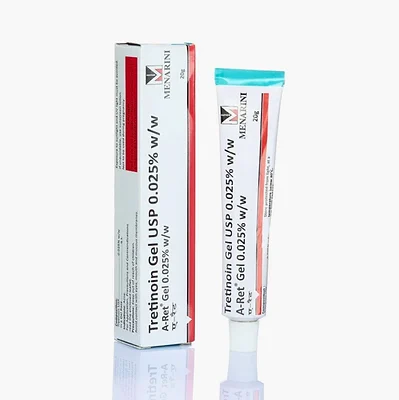
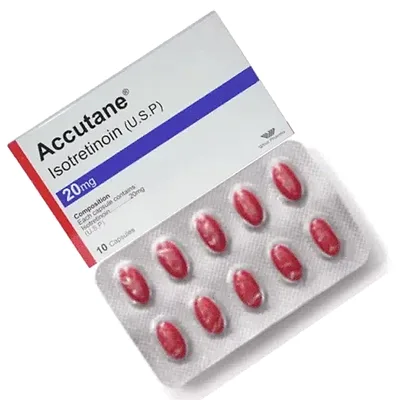
Same active ingredient as the gel. What differs is the base — and for dry, sensitive or winter-battered skin that decides whether you can stick with it.
Pores stay clear and texture evens out. It takes months.
Without prescription, plain packaging. Evening, thin layer, dry skin.
The active compound is identical. The difference is the vehicle, and it decides whether you can stay on the treatment.
A gel is lighter, absorbs quickly and usually contains alcohol. It suits oily skin and warm weather.
A cream is richer and leaves a protective layer. The compound penetrates more slowly and more evenly, so irritation is generaly lower.
Which makes a cream the sensible option for: dry or combination skin, sensitive skin, winter and heated indoor air, anyone who abandoned a previous attempt because of irritation, and people in their thirties and beyond where acne coexists with dryness.
Why it works at all
A blocked pore forms when the cells lining its opening stop shedding properly and clump into a plug. Oil builds up behind it, bacteria multiply, inflammation follows.
Tretinoin, the acid form of vitamin A, binds receptors in the cell nucleus and changes how skin cells mature.
They shed faster and stop clumping. Pores stay open and existing plugs are pushed out.
With longer use it also stimulates collagen production, which is why texture improves. That takes months, not weeks.
What it suits
Acne with blackheads and inflamed spots
Skin that congests easily
Rough, uneven texture
Enlarged pores
Marks left after lesions heal
Fine lines and sun damage
Worse before better is part of the plan
Skin usually looks worse in the first weeks. More spots, redness, flaking.
That is not damage. Lesions already forming beneath the surface are being brought up earlier.
It typically lasts a few weeks. Honest assessment comes after a couple of months.
Take a photograph at the start. The change is too gradual to register in a mirror and perfectly clear in pictures.
Applying it
Evening only.
Cleanse and wait until the skin is completly dry.
Pea-sized amount for the whole face.
Start at two or three times a week and build slowly.
Avoid eye area, corners of the mouth, creases beside the nose.
Moisturiser on top.
Damp skin absorbs far more of the compound. Waiting twenty minutes after washing is the simplest way to reduce irritation.
The sandwich method for sensitive skin: moisturiser, then the cream, then moisturiser again. It slows penetration and is what makes the treatment possible for a lot of people.
Only increase frequency once the current one is tolerated without redness. Rushing is what ends attempts.
Daily sun protection, not optional
Retinoids make skin markedly more reactive to sunlight, and that creates two problems rather than one.
You burn faster than you expect. And sunlight triggers pigmentation — frequently the exact thing people are using this to improve.
High factor protection every morning, year-round, including on dull days. Skipping it undoes a real portion of what months of treatment achieve.
Sunbeds are out entirely while using it.
What to leave out while using it
Exfoliating acids at the same time
Benzoyl peroxide in the same application
Alcohol-based toners
Scrubs
Waxing on treated areas
Simplify the whole routine while on it: gentle cleanser, moisturiser, sunscreen. Fewer products means less irritation, and you can tell what is doing what.
Pregnancy: not while using this
Vitamin A derivatives can harm a developing baby.
That covers pregnancy, trying to conceive and breastfeeding. Anyone who could become pregnant needs reliable contraception throughout.
If pregnancy occurs while using it, stop and get advice without delay.
Possible side effects
Redness and flaking
Stinging immediately after application
Tightness and dryness
Temporary flare of lesions
Light sensitivity
Temporary lighter or darker patches
Swelling, blistering or weeping means stopping and getting advice.
Ordering without prescription: how it works
One tube lasts a while, but the course is measured in months rather than weeks.
Pick the strength and the pack size, put in a delivery address, confirm. Couple of minutes, any time of day, no queue and no conversation across a counter.
It goes out in plain packaging. No pharmacy name on the outside, nothing that hints at what is inside. How long delivery takes depends on where the parcel is headed.
On price it comes down to strength and pack size. Larger packs generally work out better per unit.
The outside of the parcel gives nothing away, wherever in the UK it is going. No pharmacy branding, no product name, nothing that suggests medication. For most customers that is the whole reason for ordering online.