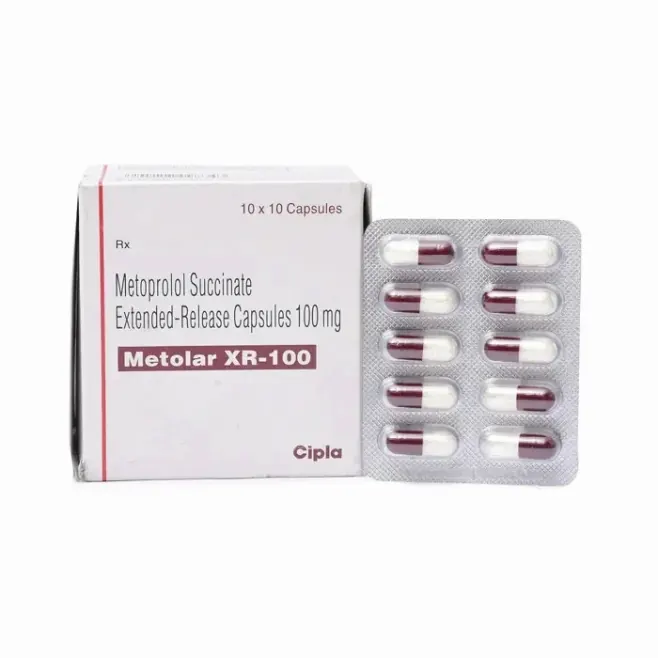
A heart under constant adrenaline drive beats faster and harder than it needs to, and that costs oxygen it may not have spare.
Metoprolol blocks the adrenaline receptors on the heart, so it beats slower and with less force.
Without prescription, plain packaging. This is one you absolutely must not stop suddenly.
What does taking the foot off the accelerator mean?
Adrenaline and related hormones act on beta receptors. On the heart, that means faster rate and stronger contraction — the fight-or-flight response.
Useful in an emergency. Damaging when it runs continuously, which it does in high blood pressure, heart failure and chronic stress.
Metoprolol blocks those receptors on the heart. The hormones still circulate, but the heart stops responding so vigorously.
Rate falls, contraction softens, and oxygen demand drops. That is the whole benefit in one sentence.
It is relatively selective for heart receptors over those in the airways, which makes it more usable in people with breathing problems than older non-selective beta blockers. Relatively, not completly.
What it is used for
High blood pressure
Angina
Irregular or fast heart rhythms
After a heart attack
Chronic heart failure, started low and increased slowly
Migraine prevention
Physical symptoms of anxiety, such as tremor and palpitations
Heart failure deserves a note, because it seems contradictory. Slowing a failing heart sounds wrong. But the constant adrenaline drive is part of what wears the heart out over years, and blocking it improves survival. The catch is that it must be started at a very low dose and increased gradually — starting high can make things worse.
Never stop it abruptly
This is the hard rule with beta blockers and it is not a formality.
With the receptors blocked for weeks or months, the body compensates by producing more of them. Stop the drug suddenly and all those extra receptors are exposed to the full force of circulating adrenaline.
The result is rebound: racing heart, surging blood pressure, angina, and in people with heart disease a genuine risk of a heart attack.
It gets tapered down over days to weeks, under supervision. Not stopped because you ran out, and not halved on your own initiative.
Which also means not letting the supply lapse.
Cold hands and feeling slowed down
Two of the most common complaints, and both make sense from the mechanism.
Cold hands and feet come from reduced blood flow to the extremities. Gloves help; so does knowing it is expected rather than a sign of something wrong.
The flattened, low-energy feeling is harder. Some people describe reduced drive, vivid dreams, or just less get-up-and-go. It often eases after the first few weeks, and sometimes a different beta blocker suits better.
Worth raising rather than silently stopping. That is how people end up with rebound.
If you have diabetes
An important and underappreciated point.
Many of the early warning signs of low blood sugar — shaking, racing heart, sweating — are produced by adrenaline. A beta blocker masks them.
So a hypo can develop further than usual before you notice it. Sweating often still comes through, but the others may not.
If you are on insulin or sugar-lowering tablets, that means checking blood sugar more rather than relying on how you feel.
Asthma and airways
Beta receptors in the airways keep them relaxed. Blocking them can tighten the chest.
This drug is relatively heart-selective, so it is usable in many people with mild airway disease — but selectivity fades at higher doses.
Anyone with asthma needs this prescribed deliberately rather than casually. Increasing breathlessness or wheeze after starting should be reported.
Possible side effects
Tiredness
Slow heart rate
Cold hands and feet
Dizziness on standing
Vivid dreams or disturbed sleep
Low mood
Erectile difficulties
Digestive upset
Get checked for a very slow pulse with dizziness or fainting, worsening breathlessness, or swelling with rapid weight gain.
Ordering without prescription: how it works
Because this is a medicine that must never be stopped abruptly, running out is itself the risk.
Pick the strength and the pack size, put in a delivery address, confirm. Couple of minutes, any time of day, no queue and no conversation accross a counter.
It goes out in plain packaging. No pharmacy name on the outside, nothing that hints at what is inside. How long delivery takes depends on where the parcel is headed.
On price it comes down to strength and pack size. Larger packs generally work out better per unit, which matters on something taken long term.
Delivery goes anywhere in the UK, in plain outer packaging with no logo and no product name on it. How long it takes depends on where it is heading and which service you picked. Prices are in pounds.